

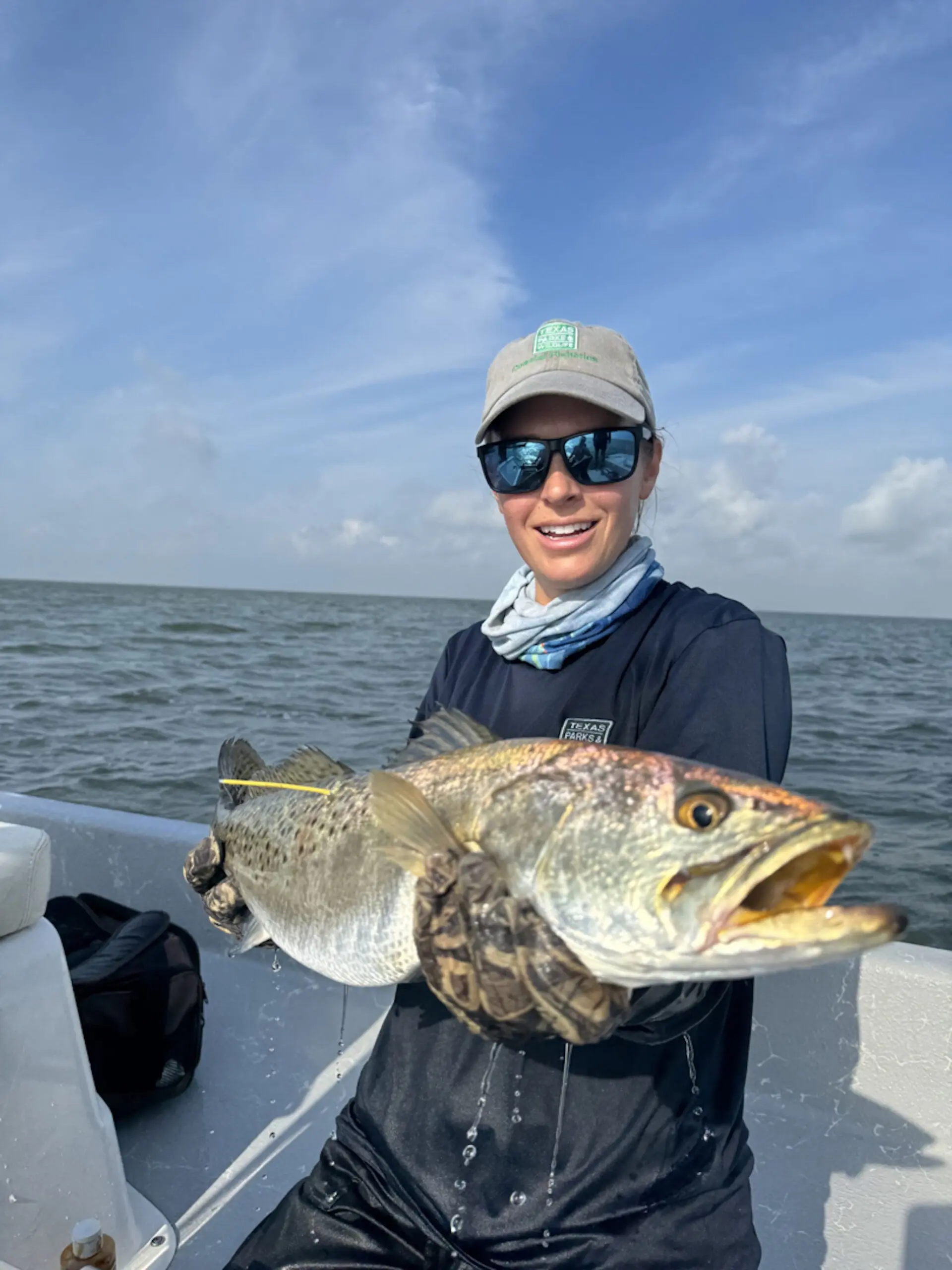
TPWD Upper Laguna Madre Ecosystem Leader Ethan Getz has been spearheading an acoustic tagging study on trophy-sized speckled trout in Baffin Bay. The goal of the program is to gain a better understanding about the movements and behaviors of the trophy-caliber fish the Baffin Bay system is known for producing, and that so many coastal anglers passionately pursue, year after year.
“We started implanting acoustic tags in fish back in May of 2025,” Getz said. “The study began with 30 tags, and we currently only have three left to implant in large speckled trout.”
The 27 trout that have been tagged so far were all larger females in the 24- to 30-inch range. Getz said the acoustic tags inside these fish are pinging every three minutes or so.
“We’ve currently got an array of acoustic receivers spread out across Baffin Bay, and one in the Land Cut,” Getz said. “Those receivers will pick up the pings from the acoustic tags implanted in trout that swim within about 300 to 500 meters of them, allowing us to track their movements.”
Getz said the acoustic receivers were strategically placed in locations known for holding trophy-caliber speckled trout.
“Based on scoping meetings and public hearings that followed the significant fish kill which occurred as a result of winter storm Uri in February of 2021, it was clear the majority of Texas coastal anglers wanted our estuaries to be managed with a trophy fishery mindset,” Getz said.
There had been numerous speckled trout studies conducted over the years, but none specifically focused on that trophy-sized cohort.
“We did some analysis of gill net data from years past and looked at some trends in trophy trout and their distribution and found these calibers of fish definitely tend to hang out in different areas than the general population of smaller speckled trout,” Getz said. “That’s something anglers have always told us, so it was pretty cool to prove what they have been seeing over the years with our data.”
Getz said it was this idea that sparked the motivation for the ongoing acoustic trout tagging study, which will provide data about trophy trout movements and how they are using specific habitat under a variety of conditions, scenarios, and weather events. He looks forward to sharing this data and info gained about trophy trout behavior and movements with all public anglers.
“Our hope is to take what anglers are seeing on the water in regard to trophy speckled trout, and match it with our data from this study,” Getz said. “This will help us better manage our fisheries and ensure the future of these trophy caliber fish.”
According to Getz, there are plans to continue and expand this study. He said TPWD will be receiving 25 more acoustic tags soon, so they can continue to tag trophy speckled trout, add to their data set, and keep the research rolling along.
“We also plan to add additional acoustic receivers to various locations, including some outside of Baffin Bay to see if these fish actually travel between various bay systems,” Getz said.
In addition to the acoustic tag implant, trout tagged in the study also received an external tag with an ID number and TPWD’s Coastal Fisheries office number. So if an angler does catch one of these fish, they can call the number on the external tag and report it. This will reveal how far the trout has moved since it was initially tagged, and how much it has grown since it was tagged.
Because the study is focused on larger, mature female trout, Getz said they have been giving each tagged fish a traditional, “old lady” name, such as Dolores, Betsy, or Gladys.
All of the fish tagged in the project have been caught by rod and reel in Baffin Bay. Getz and TPWD have been teaming up with knowledgeable fishing guides and avid trophy trout anglers who are passionate about the fishery to catch and tag these fish.
Chris Bush is one of the anglers who has been helping with the acoustic tagging program. He’s been fishing alongside Getz to catch trophy trout for the study.
“I think the study will provide us with tangible data about how trophy speckled trout are using the resource in regard to specific habitat features,” Bush said. “This will allow TPWD to make more informed management decisions to not only help maintain the habitat these fish need but hopefully enhance or increase that habitat as well.”
Bush said one of best parts about participating in the study has been seeing how passionate Getz is about speckled trout from an angler perspective.
“He’s a steward of the fishery by his job title, but he is as passionate of a speckled trout angler as anyone I know,” Bush said. “It’s been really neat to see one of our coastal fisheries biologists understand, respect, and enjoy the angling component of our fishery in addition to the science or ecological component. He has a vested interest in the resource both as a biologist and as an angler, because he loves speckled trout, and he loves the sport of fishing.”
