

Now that rainbow trout season is closing out, anglers are turning their attention to another unique fish in the Hill Country.
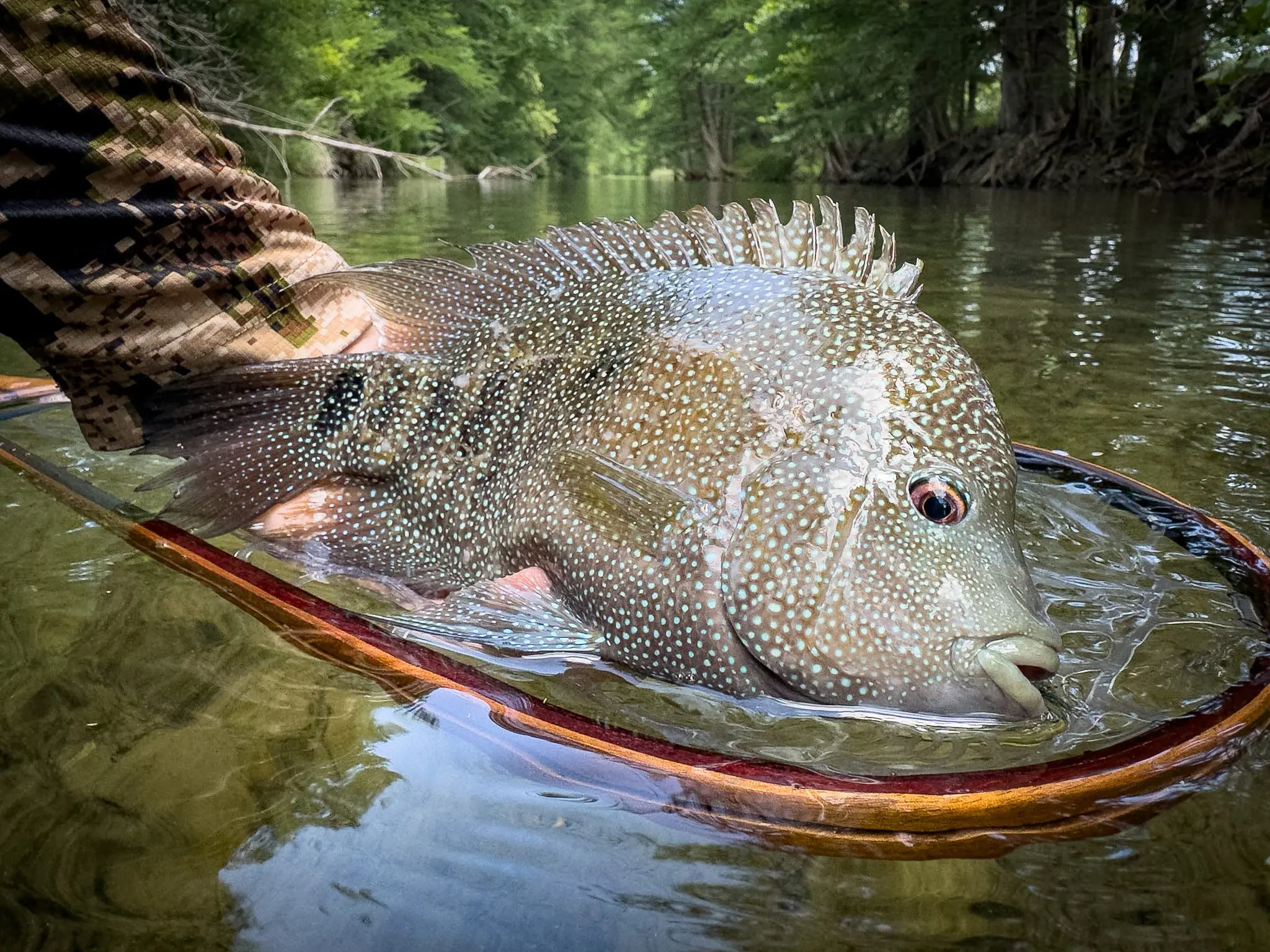
Rio Grande cichlids are the only cichlid native to the United States. Originally only found in the Lower Rio Grande, translocation efforts have expanded their range to the Colorado, San Marcos, and Llano rivers, along with many of the creeks and tributaries that feed them.
Especially popular with light-tackle and fly fishermen, the cichlid population has grown to a size that can be targeted, even in cities.
“They are also available in a lot of places that are more urban. Especially around San Antonio,” said Chris Johnson, owner of Living Water Flyfishing. “They are really popping off right now on the San Marcos River. It doesn’t really come down to location as much as it does timing.”
Johnson and his clients typically target the pre-spawn fish in May.
“You’re catching them on the front end of the spawn when they are actively feeding up for spawn,” he said.
On the Nueces and Medina rivers, Johnson and his clients are targeting likely spawning areas.
“Now you should start seeing activity where they are actively looking to pair up a little bit,” Johnson said. “Look for fish emerging from cover like undercut banks, trees, and rocks along the bank.”
The Rio getter and the Rio bandito have produced the most and best quality fish for Johnson and his clients.
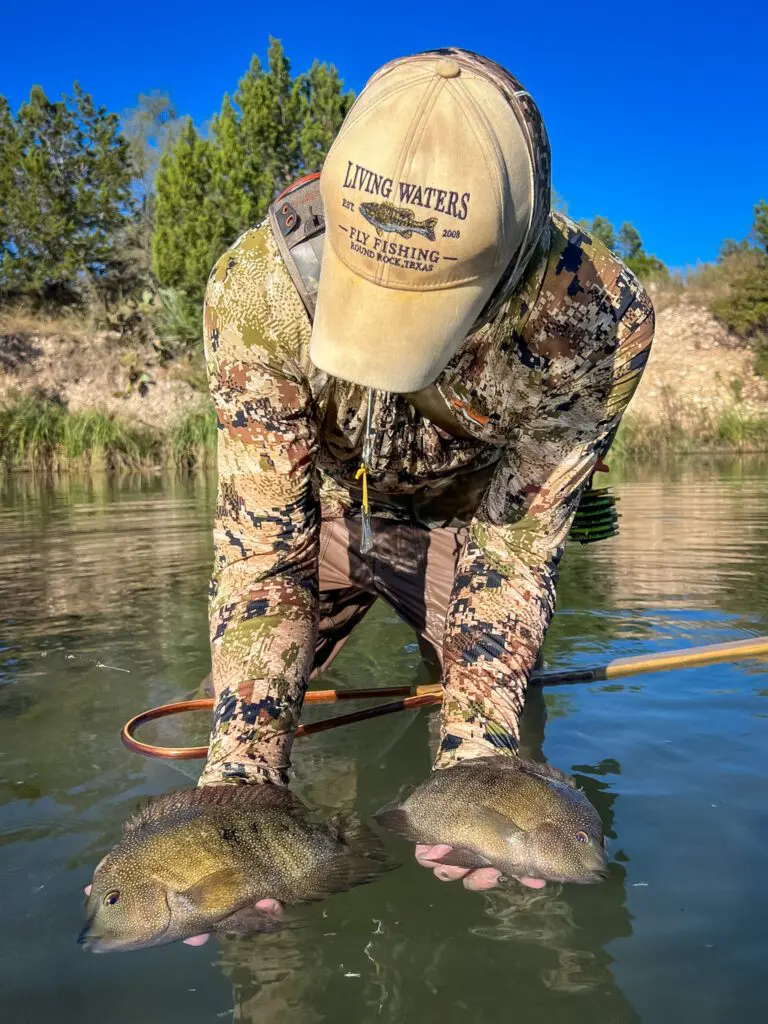
“If you have those two patterns in your box, you will be fine,” Johnson said.
Anglers should target cichlids defending their nests and the larger fish will be guarding fry.
“When they are guarding their fry, they change their diet,” Johnson said. “This will make the fishing tougher for those trophy-sized cichlids through the heat of summer. The younger fish will stay on invertebrates all year long.”
On the Llano River, the fishing for cichlids has been extremely good, according to Heath Wooten with Water Tide Outfitters. He and his clients are targeting moving water.
“Right now, as the water is warming up, I am looking for water that has good flow and good oxygen. It’s moving a lot of food through that area,” Wooten said. “A lot of times, I am finding them at the end of a riffle.”
He and his clients are using a technique called swinging flies.
“It’s when you cast out and allow the fly to swing through the water column naturally,” Wooten said. “We are using small streamers, small woolly bugger-style flies, and small carp-style flies. You want smaller flies that are heavy that get down.”
A gold sparsely tied woolly bugger and the Rio bandito have been very productive for Wooten and his clients.
“A small gold woolly bugger seems to be doing really good here right now,” he confirmed.
As the cichlids start to spawn, Wooten and his clients haven been transitioning to looking for them to be on beds in sandy, rocky areas.
“They’re going to get out of the heavy, fast-moving water,” Wooten said. “I am using the same pattern flies.”
