

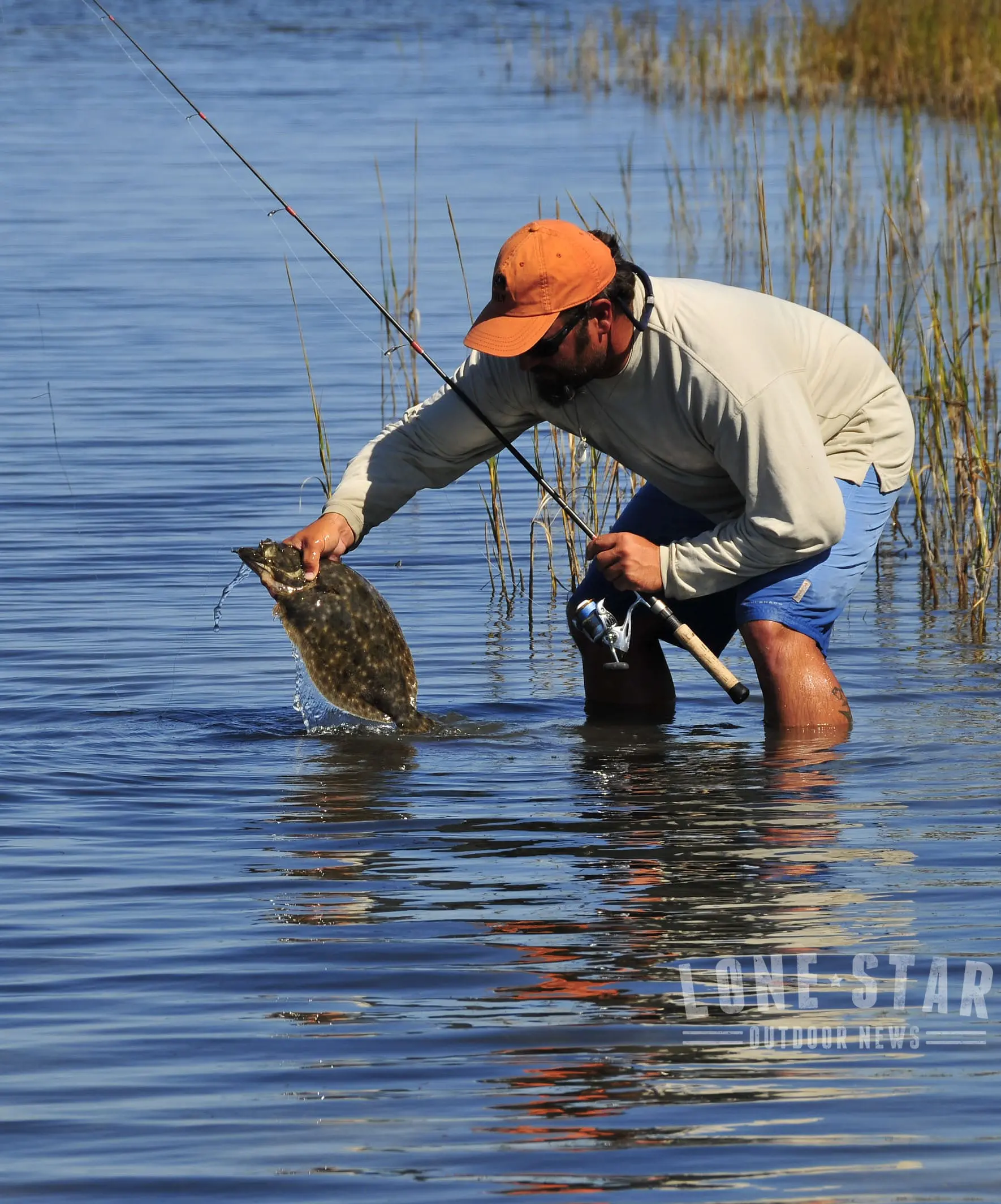
Anglers are reporting more catches of flounder this fall, and flounder giggers had one of their best years until the season closed for the month of November.
At the Texas Parks and Wildlife Commission meeting on Nov. 2, Tiffany Hopper of the Texas Parks and Wildlife Department, Coastal Fisheries Division provided an update of southern flounder populations and survey results.
“Flounder numbers have stabilized, but at a lower level from numbers in the 1980s,” Hopper said. “We have seen a slightly positive trend, but there was very poor recruitment in 2016 that may affect the overall numbers.”
The full effect of regulation changes has yet to be determined. In 2009, the bag limit on flounder was reduced from 10 to five fish, a two-fish limit was imposed from Nov. 1 until mid-December, and gigging was banned in the month of November.
“It takes one year to see about 60 percent of the impact from the changes,” Hopper said. “But it takes six years to see the full impact.”
Gillnet data show the flounder population has been stable since about 1992, albeit at a lower level from numbers in the 1980s.
“Warmer winters mean lower recruitment for flounder,” Hopper said. “We may not see it go up until we see colder winters.”
Bag seine data showed flounder recruitment has been variable.
“In 2015, it was the highest ever,” Hopper said, “But in 2016, it was very low. One poor year-class can result in lower production.”
TPWD’s creel survey program has shown a general upward trend in flounder catches since 2011.
“We have several reports that flounder fishing this year is the best in some time,” Hopper said.
Still, data suggests most anglers are still targeting trout and redfish, and consider flounder a bonus.
“Most anglers reported catching one flounder per trip,” Hopper said.
