

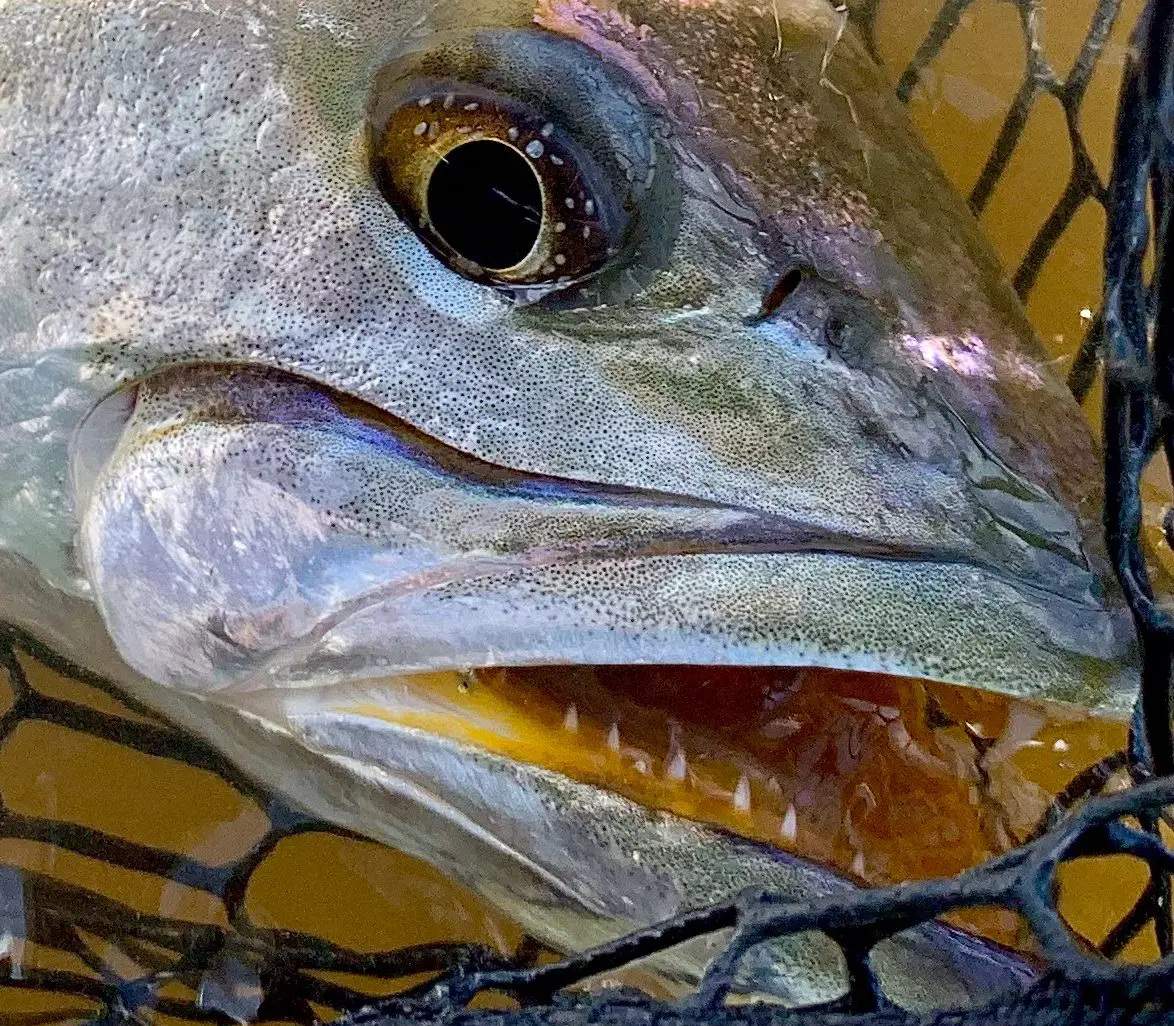
While most lower coast angler favored revisions to speckled trout regulations, upper coast anglers are struggling with the discrepancy in limits next door in Louisiana.
In February 2021, winter storm Uri hit Texas and caused an estimated $200 billion in damages across the state.
The resulting fish kill impacted the spotted seatrout population more than other species. Texas Parks and Wildlife Department implemented emergency trout regulations in April of 2021 in the Laguna Madre Bay only. Those expired in September 2021.
“After we did more coastwide work, we determined that (the die off) was a little bit bigger than we thought,” said TPWD’S Coastal Fisheries biologist Mark Fisher.
The following year, the regulations were expanded from Matagorda through the Lower Laguna Madre. Those restrictions were to sunset in August 2023.
“After the temporary measures sun-setted, anglers, our constituents, decided they liked these new regs, and after it expired, there was a grassroots movement to make them permanent and coastwide,” Fisher said. “I will have 33 years with the agency next week, and I have never seen that.”
TPWD conducted public surveys on keeping the emergency regulations fulltime. More than 11,500 license holders were surveyed. Of those who participated, 10,000 were non-guides and 1,584 guides. Forty-seven percent of the recreational anglers and 54 percent of the guides approved with the regulations remaining in place.
“At the final commission meeting, there was nothing but support for it,” Fisher said. “The three fish slot, 15 to 20 inches, with one trout over 30 inches, regulation was made permanent in March 2024.”
From 2021-23, the gill net surveys were showing an improved population of trout, lining up with TPWD’s expectations. The goal of the three-fish limit and slot was to help the trout population recover in the hardest-hit areas. In implementing them permanently, TPWD estimated there would be a 26-percent increase of breeding stock. However, TPWD has not been able to perform a gill net survey for two seasons due to impending litigation from federal agencies.
After five years of the regulations, TPWD are unsure if estimates were met. Mixed reporting from anglers makes it difficult to tell how positively the new regulations affected the trout populations. Two years later, the feelings seem more mixed than before.
Many anglers LSON spoke with agreed that the regulations set in place after the freeze and beyond were for the conservation and recovery of the trout population and sporting community. However, anglers are split on how the regulations should be managed for the northern and southern parts of the state. In the northern half of the state near the shared border with Louisiana, anglers and guides alike report wanting a more liberal limit like their neighbor.
Louisiana license holders can catch and keep 15 spotted trout in the slot between 13 and 20 inches with no more than two fish over 20 inches.
“I don’t know how they can regulate a fish/trout population on the upper coast with regulations that are meant for the lower coast,” said Chris Phillips with Sabine Outdoors LLC. “Our fishery is completely different than what is down there in Port Mansfield.”
Phillips has noticed that if a Texas angler wants to fish for trout, they will fish the Louisiana side. It is an added expense for Texas guides and anglers who want to fish the more liberal limits in Louisiana. Phillips would like to see more cooperation between Louisiana and Texas where both states agree on a management plan for the shared lake, much like Lake Texoma in North Texas on the border of Oklahoma.
“To find some middle ground there within the lake (would be really helpful),” Phillips said. “It’s a unique situation.”
Richard Malone, an avid fisherman in the Sabine Lake area, echoed Phillips’ sentiment.
“I don’t understand how, when they made the regs, they didn’t take into account the different fishery,” Malone said. “We fish the same waters as Louisiana. So, I can launch a boat on the Texas side and keep three fish. I can launch in Louisiana and keep 15. We fish the same water.”
Malone approved of the three-fish bag limit, but he would like to see the states come together and agree on the regulation for Sabine Lake. The consensus among anglers spoken with at Sabine Lake said there needs to be a tweaking of the regulations for the unique fishery. The Sabine Lake area was not as greatly affected by the storm in 2021, evident by the fact that the emergency regulations never made it that far north. The anglers and guides agree the problem is the large disparity between Texas and Louisiana’s regulations.
In the southern half of the state, anglers and guides trended neutral to approving of the new regulations, with some variation on what the regulation should be. Guides and anglers also expressed concern over the mortality rate of catch and release. Several were in support of widening the slot limit so there are less releases before getting to the three keepers.
There are no current plans to change the regulation. Without gill net surveys, TPWD and anglers are blind to the true impacts of the regulation and limits. TPWD cannot confirm if there has been an increase in the breeding stock biomass as predicted, how much the population has increased, or if the quality of fishing has improved with the slot limit. These factors make it difficult for anglers or TPWD to refine the regulation for unique fisheries like Sabine Lake.
The government shutdown slowed down TPWD’s application to get their gill nets back.
“We hope to get them back next spring,” Fisher said.
