

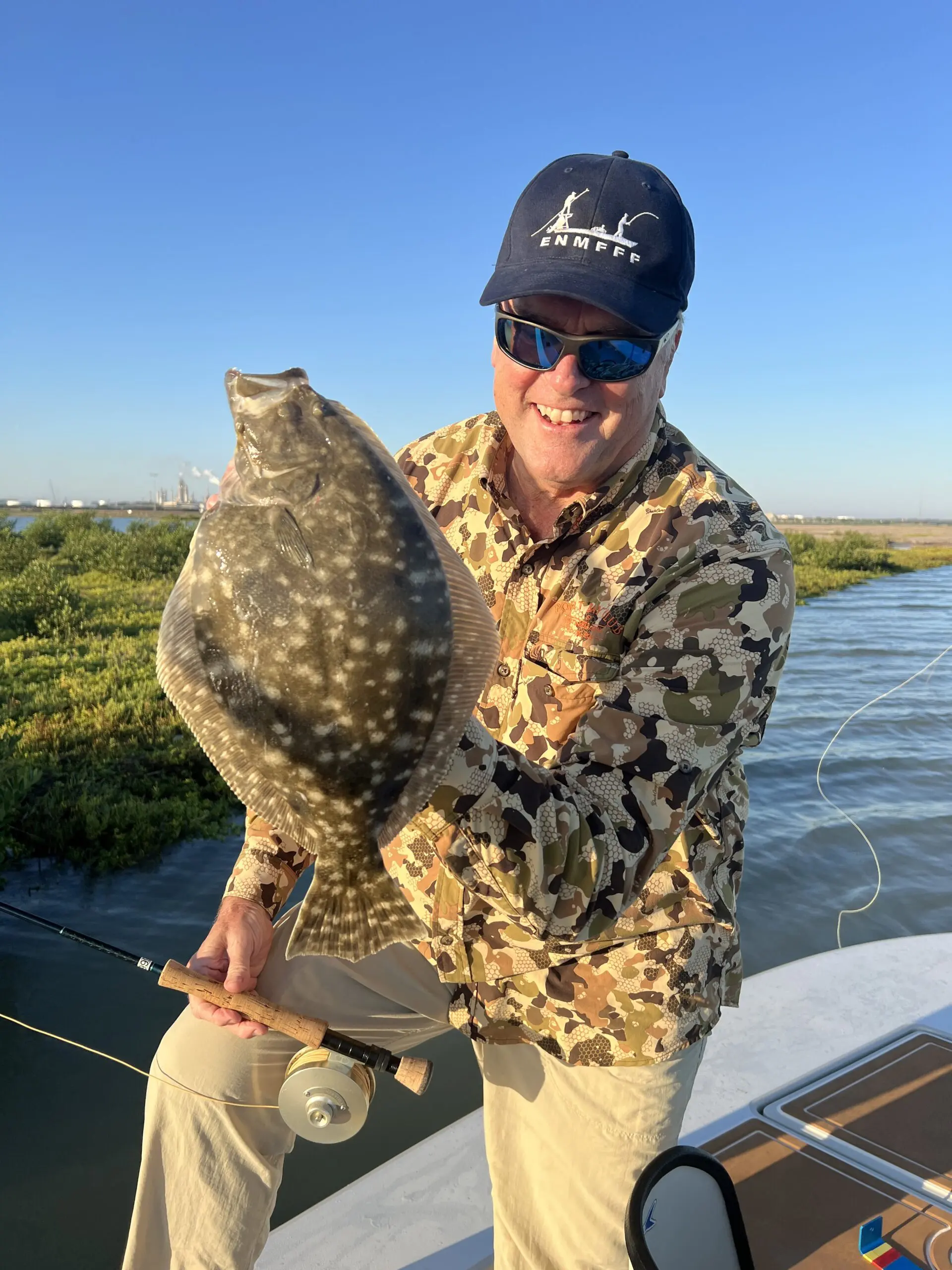
Determining the impact of seasonal closures of flounder has been challenging for TPWD.
“We saw a bump in 2022. It went back down in 2023 to where we saw it in 2021. The problem that we have is we don’t have any data since then, really. Because the gear that we use to survey, gill nets, has been suspended since the beginning of last year,” said TPWD’s Joel Anderson.
The gill net program is currently suspended due to pending litigation from the National Oceanic and Atmospheric Administration, alleging the gill net program kills dolphins. (Read more about the litigation here)
TPWD does conduct creel surveys at boat ramps.
“That’s a good way to determine what is being harvested. It is not as great a way to determine abundance,” Anderson said. “Because what we see is constrained by what anglers are allowed to harvest, but catch seems to be pretty steady over the last ten years, so that’s an indication that there hasn’t been a decrease.”
There are a couple of other ways biologists use to target younger fish: bag seine and bay trolls.
“Neither of those has really shown the same trends as our gill nets, so we know that the natural mortality is happening somewhere between our gear targeting smaller fish and gill nets,” he said.
These other methods do not tell TPWD how the adult population of flounder is doing, though, which has made it difficult to tell if the complete closure of the season from Nov-Dec has had any effect on overall populations or how effective the flounder stocking program has been in recent years.
“We do have a pilot study that’s going on that is being funded by funds from the Gulf States Marine Fisheries Commission,” Anderson said. The focus of this study is to get a handle on the discard number, or the fish that are not harvested by anglers, of various species. It is not specifically targeted to flounder; “but we can get a better estimate of what is being caught in that fishery that is not constrained by the bag limit,” he added.
This study is set to begin next year. There are three locations for the pilot program – Galveston Bay, San Antonio Bay, and the Lower Laguna Madre. There will be technicians at the beginning of the day handing out cards to anglers so they can mark what they caught for the day. At the end of the day, they can put them into a collection box at the boat ramp.
“We are hopeful that we are going to get our gill nets back. We are working with the folks in the endangered species department in the National Mariner Fisheries Service,” Anderson said. “If we can start trending positively and get back some of what we lost it would be a lot better.”
There is light at the end of the tunnel. Since 2006, TPWD has been breeding and stocking southern flounder in the Texas Bay system. In the last decade, TPWD has made major improvements to its breeding programs and more recently to the flounder brood tanks at the Sea Center.
The production success of flounder has significantly improved but anglers won’t really know how effective these recent regulation changes until TPWD can once again conduct gill net surveys to report accurate numbers.
