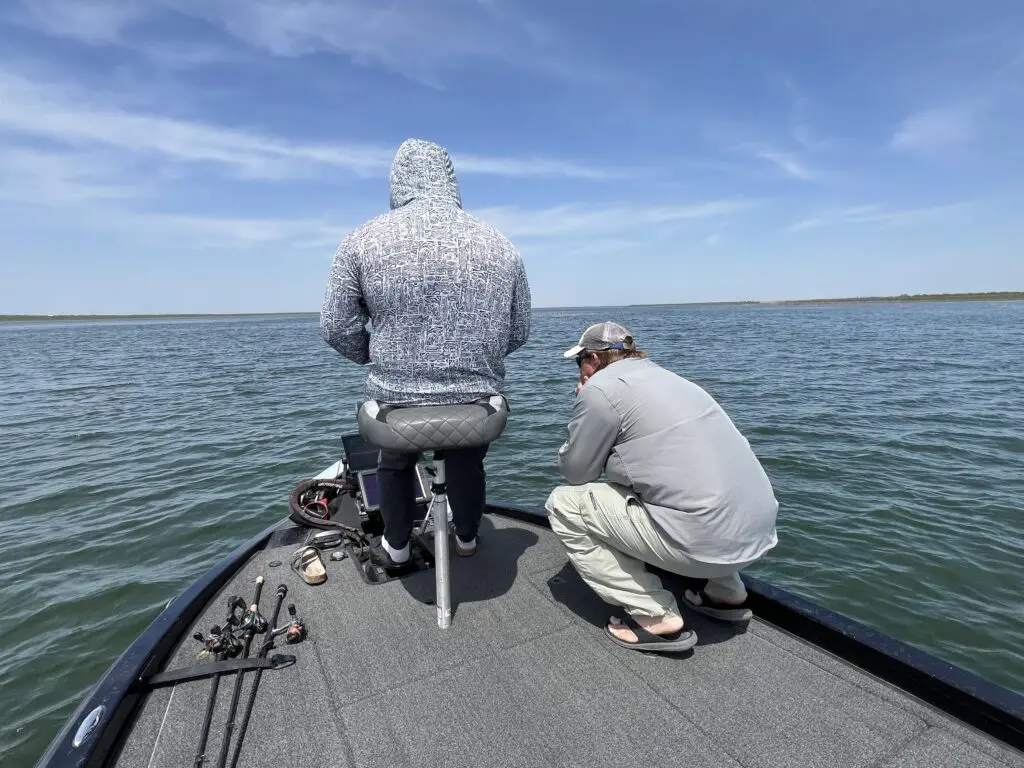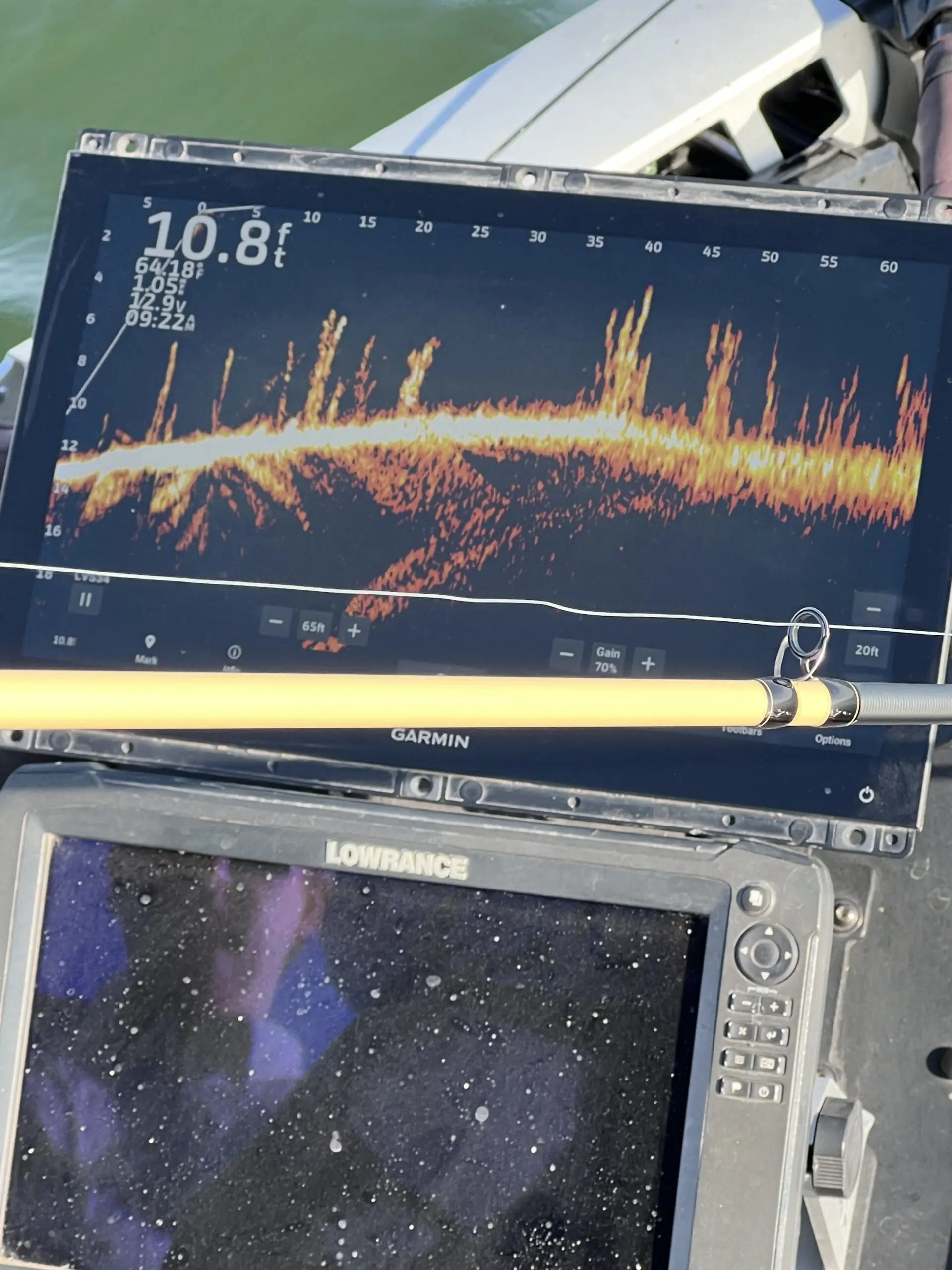
The world of bass fishing has been swept into a technological revolution, as forward-facing sonar has transformed how anglers locate and engage with fish. One thing is certain, though — fishing with FFS to bring in big bass is more difficult than it appears.
The tool which allows users to see fish in real time and observe their behavior, has gained traction across Texas lakes and in tournaments across the country — sparking both excitement and concern within the fishing community.
At the forefront of this revolution is Tristan Marsh, a fishing guide on Lake O.H. Ivie and other West Texas lakes. Marsh has built his reputation — and his business — around the effective use of FFS.
Each day, he scans the lake bottom for fish signatures, casts his lure with precision, and watches closely as fish react on his sonar screen. If they don’t show interest, Marsh moves on.
“This technology has changed the game,” Marsh said. “It’s not just about fishing anymore — it’s about strategy, precision and efficiency.”
The technology closely resembles a thermal riflescope, just underwater. It picks up signatures of underwater structure and fish. However, many of those fish may not be your target. What may look like a bass will turn to the side and swim away and the signature shows it’s a catfish, gar or a carp. Sometimes you see a signature that looks like baitfish, but it could be a school of crappie.
Marsh hunts and scans the bottom until he sees a fish he suspects is a bass. He then casts his lure and watches the screen to see how the fish reacts. He doesn’t waste time if he doesn’t get the reaction he wants. After years of practice, he knows when the fish is ready to eat or not.
When it works, it’s great. But Marsh and the other guides will be quick to tell you they spend hours and hours scanning before
even casting a lure.
FFS has its naysayers, some claiming FFS undermines the values of fishing.
“The concern is less about the technology itself and more about how it’s used,” a Texas Parks and Wildlife Department spokesperson said.
Fishing tournaments have responded with new rules. Major League Fishing allows FFS but restricts its use to one of three daily
fishing periods. The Bassmaster Elite Series enforces limitations on sonar hardware, capping each boat to one live sonar transducer and screen sizes to 55 inches. Bass Champs allows the full use of FFS, and recent champions credit the technology for their success.
One thing is certain. Forward-facing sonar is here to stay.
Jake Norman, the TPWD District Supervisor in Tyler, said it was crappie anglers who more broadly accepted the technology first.
“More people are interested in trophy crappie, 2-plus-pounders,” he said. “With forwardfacing sonar, you can find fish out in he middle of the lake. People are putting baits in front of fish more consistently. It’s impressive technology.”
If your goal is big bass, before running out and spending $3,000 or more, it’s worth it to hire a guide, even at the high cost.
Other anglers attest to the learning curve of FFS for big bass. Stan Gerzsenyi, a longtime guide, said it took many trips to gain some expertise.
“I didn’t know what I was looking at,” he said. “You might know there is a fish there, but not what it is or what size it is.”
If you choose to invest in FFS, recognize it’s a time-consuming learning process to be come proficient. YouTube and other videos can help, but only time on the water will help you master the technology.
Anglers who have hired guides or regularly use the units are quick to advise you owe it to yourself to give FFS a try before either deciding whether it’s the best thing ever or condemning it.
Rates for Marsh and other guides reach up to $1,000 per day. A few of his peers charge up to $2,000.
But when you fish with Marsh, he’s not just guiding you. He’s teaching you how to use this new technology.