

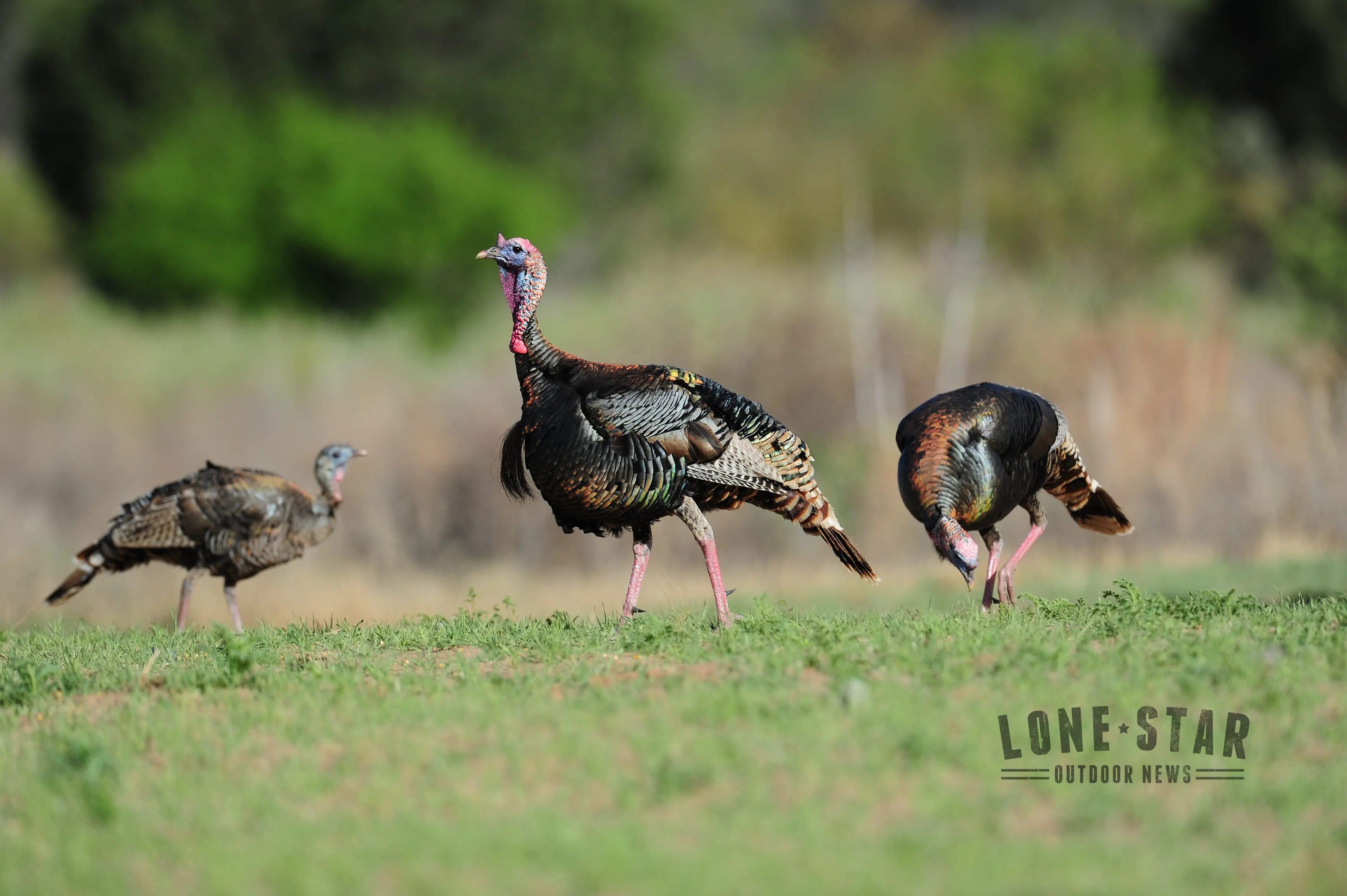
Researchers at Texas A&M University are studying wild turkeys in Texas to determine the prevalence of neonicotinoid pesticides in tissue samples. Neonicotinoids are the most commonly used insecticides in the world, with massive application to crop seeds in North America.
We are trying to understand if wild turkeys are exposed to neonicotinoids as a starting point to see if additional work is needed to determine the consequences of these exposures,” said Sarah Hamer, Ph.D, principal investigator and director of the Schubot Center for Avian Health in the College of Veterinary Medicine and Biomedical Sciences at Texas A&M. “We are building upon our prior work that shows broad patterns of wild bird exposure.”
Grad students at A&M have been studying songbird toxicology for years, and they are seeing an alarming uptick in the pesticides, leading to a reduction in birds and insects alike.
“About one third of songbirds we tested in non-agricultural areas of Texas were positive for neonicotinoid exposure in plasma samples, a tissue in which we expect has about a 24-hour window of detection for compounds,” said Meredith Anderson, co-investigator and Ph.D. student in the Ecology and Evolutionary Biology Program at Texas A&M. “This indicates that neonicotinoids are pretty widespread in these environments.”
Turkeys may be exposed to neonicotinoids through ingesting contaminated insects, seeds, water, nectar, soil, dust or through skin and feathers during preening.
“Birds and bees are struggling,” said Gabe Hamer, PhD, Professor at TAMU. “We know populations are impacted by feral cats and building strikes, but insecticides remain a bit of an unknown. We suspect they are having a large impact. Insects are an important food source for turkeys, especially poults. We know through other research that poult production has been down across the country for turkeys. We are looking hard at turkey populations in areas with heavy agriculture. Texas, Iowa and Illinois are three states that sent in samples this past spring.”
After receiving a grant from the National Wild Turkey Federation, students and program faculty began by contacting TPWD biologists to take samples of hunter-harvested birds from the state’s wildlife management areas.
“Starting this past spring, Jason Hardin with TPWD helped coordinate the acquisition of samples from WMAs that conduct draw hunts,” Gabe Hamer said. “We got sample kits to the biologists and received hunter harvested birds. We will learn a lot in year one.”
Hamer said the prevalence of neonicotinoids is hard to detect from a sample after a few days, so getting them quickly is a concern. Spring birds tested against birds harvested in the winter could yield different results. Researchers collected both blood and tissue from the liver because these chemicals are generally only detectable in blood samples for a short window after an exposure; whereas in the organs like the liver, there is a longer window of detection, and researchers can also look for metabolites of the chemical.
“A lot of our current samples came from winter,” he said, “and there is not as much agriculture in the winter. We might find the winter birds don’t show up as well as the spring birds. Are hens more important than gobblers because they sit on the nests? Does that have an impact?
Hamer said he is grateful for the work of the TPWD biologists.
““We’re really fortunate to have access to these samples,” Hamer said. “We’re also grateful to the biologists from each state that worked with us. They became empowered to figure out what study design would work best for their particular state. We definitely could not take a one-size-fits-all approach to the study design. It was pretty cool to get the insight of the biologist and what they thought would work best.”
