

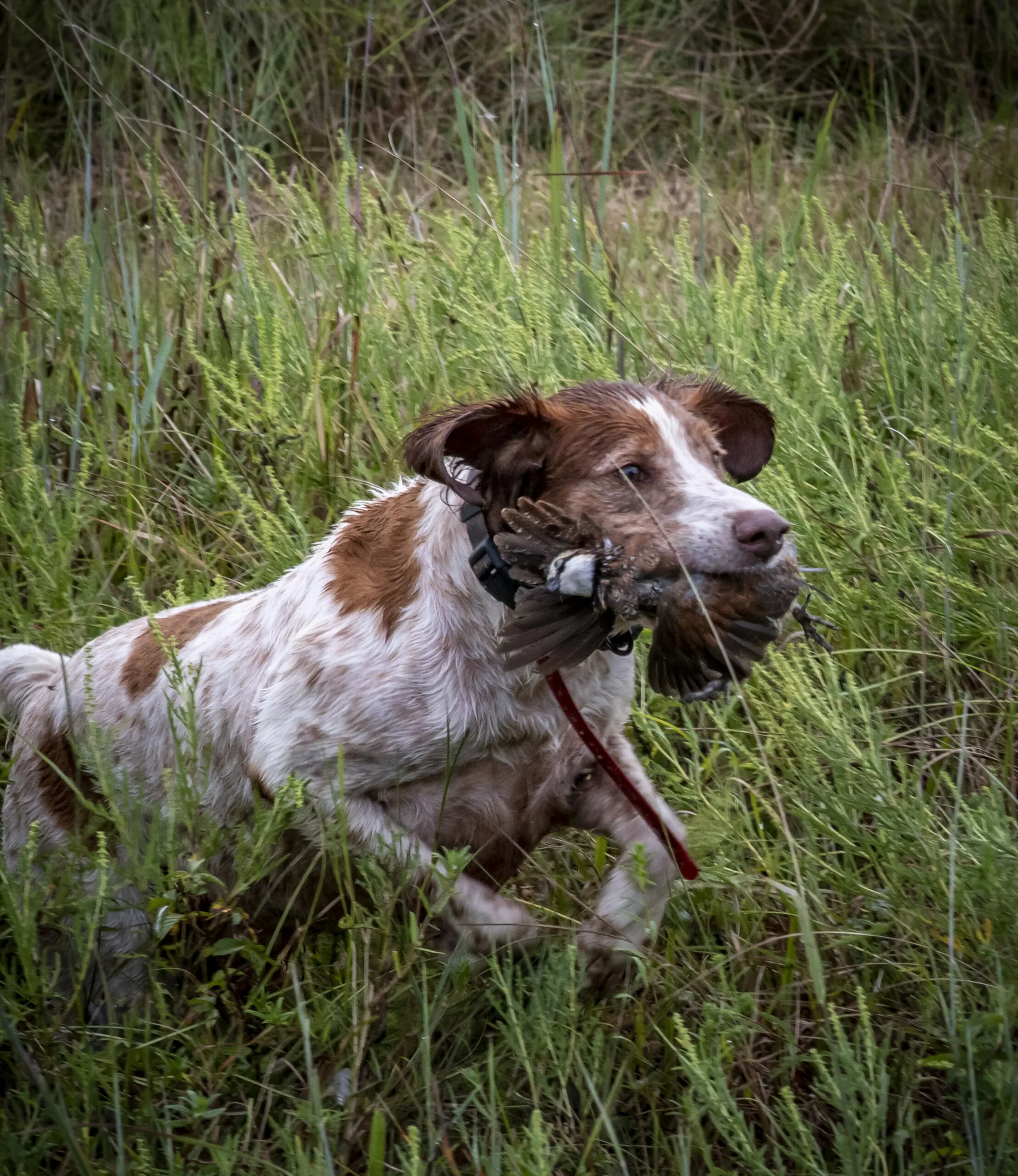
Quail populations in Texas have decreased by nearly 5%annually, according to estimates from wildlife biologists.
In some regions like the Pineywoods of East Texas in Angelina National Forest, that estimate is as high as 10% annually. While Texas has seen a better-than-average season in 2025 and 2026 due to the mild winters, the number of birds found on public lands continues to decrease.
While TPWD speculates on the possible causes of the declining population, it can be summed up to habitat loss and lack of land management. Quail hunting is now almost exclusively a private landowner’s domain. Those who do not have the same bureaucratic constraints as TPWD and the US Forest Service that manages our public land are able to, with great success, manage their land for quail.
There are some state-owned Wildlife Management Areas that had an incredible 2025 season. Two WMAs in the state, Gene Howe and Matador, were particularly good for public hunts. But because they are in the rolling plains, their quail populations can be erratic depending on rainfall. Which means public access to wild quail populations in Texas is spotty at best. That doesn’t have to be the end of the story.
In 2024, Tall Timbers, an organization dedicated to restoring wild quail, performed a survey in 144 locations through the Sabine and Angelina National Forests, and in 17 percent of the locations, they found quail were present. In that same time frame, Tall Timbers began working with a local private landowner who had already begun putting into practice many of the recommendations from Tall Timbers habitat management.
“We have started working with several properties, and one of which we have been working with for five or six years now,” said Dr. Brad Kubecka with Tall Timbers. “They did a lot of habitat management, like I kind of mentioned, timber thinning and prescribed fire, and after that, we translocated quail to those properties.”
These properties have been a proof of concept.
“We were able to compare survival and reproduction, adult survival, nesting rates, nest success, all these things between the source population and the east Texas birds. The birds in East Texas did just as well as the source population in Florida, and in two years, they actually did better with more nests and higher annual survival,” Kubecka reported. “(The population) has been increasing each year.”
The results of the study are promising and show that applying the same habitat management plans Tall Timbers does in the Red Hills of Florida, primarily prescribed burns in focal areas, will be effective in rebounding the native bird population.
“You wouldn’t have to reintroduce birds there (public lands in Pineywoods). The birds are there, and they would respond to habitat management,” Kubecka said.
It is very clear what needs to be done — thin the timber and perform prescribed fires in focal areas.
“If the Forest Service was to establish, say, a focal area, we would know where to establish it because we know where the birds are most localized in that forest,” he said.
Unfortunately, due to reduced funding and a lack of resources, the Forest Service, while responsive to the habitat studies, the regulatory hoops to jump through make putting these practices in action problematic at best.
“Quail management helps. It checks every single one of those boxes that the Forest Service is trying to meet,” Kubecka said. “Specifically, quail management (which includes prescribed fire) reduces wildfire risks, increases biodiversity, and recreational activities.”
Tall Timbers has done a lot of the field work to determine how to best apply the practices that will bring back a huntable population of birds back to public land.
“We don’t want to be an organization that says we want something; we want to provide solutions,” Dr. Kubecka said.
According to Kubecka, it will take the local community getting involved through non-profits by volunteering for surveys, reaching out to TPWD, and promoting them to work with the Forest Service through a stewardship agreement to implement these practices.
