

While the pinnacle for most waterfowlers is an ancient bird with a leg band, or an exotic species from some far corner of the globe, most agree in having a particular interest in waterfowl anomalies.
Tanner Neill, Wildlife Manager/Hunting Guide out of Johnson City, struck waterfowl gold this year on a pond in deep south Texas.
“I had a group of hunters coming in soon, so I made the rounds scouting for the coming week. When I found the bird, I could tell he was something special but didn’t know what exactly. I went in the next morning with my shotgun looking for one bird and left with one bird,” Neill said.
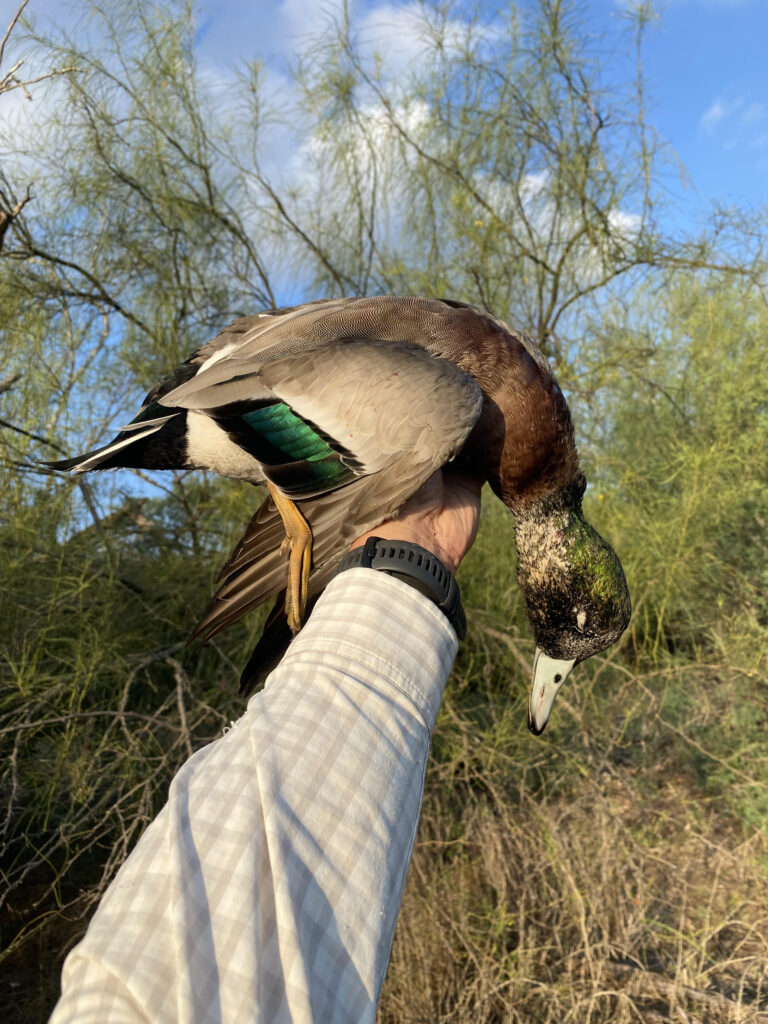
Neill’s drake dabbling duck sported a green head, chestnut chest, pointed tail, and blue bill. Seemingly a combination of most every dabbling duck species. Tanner assumed it was a potential hybrid so sought out the insight of Ben Pierce, an industry leader in hybrid waterfowl with more than 30 years of firsthand experimentation hybridizing captive wild waterfowl in controlled licensed aviaries. Pierce confirmed Neill’s assumption and identified the hybrid as a mallard/wigeon cross.
Pierce began working with hybrid waterfowl when he was just 12 years old. Now 43, he has worked with at least 47 confirmed hybridized waterfowl combinations in his controlled aviaries. Institutions such as the University of Washington recruited Ben and his work to act as the control for their own hybrid duck study.
“When I first got started, I read Handbook of Waterfowl Identification by Frank S. Todd.’ That book became my holy grail.” said Pierce.
Since 2013 he has become one of, if not, the most respected expert for hybrid waterfowl research and will be coming out with his own book on the topic soon. Pierce urges anyone with a potential hybrid to send him a photo and he will identify the pairing.
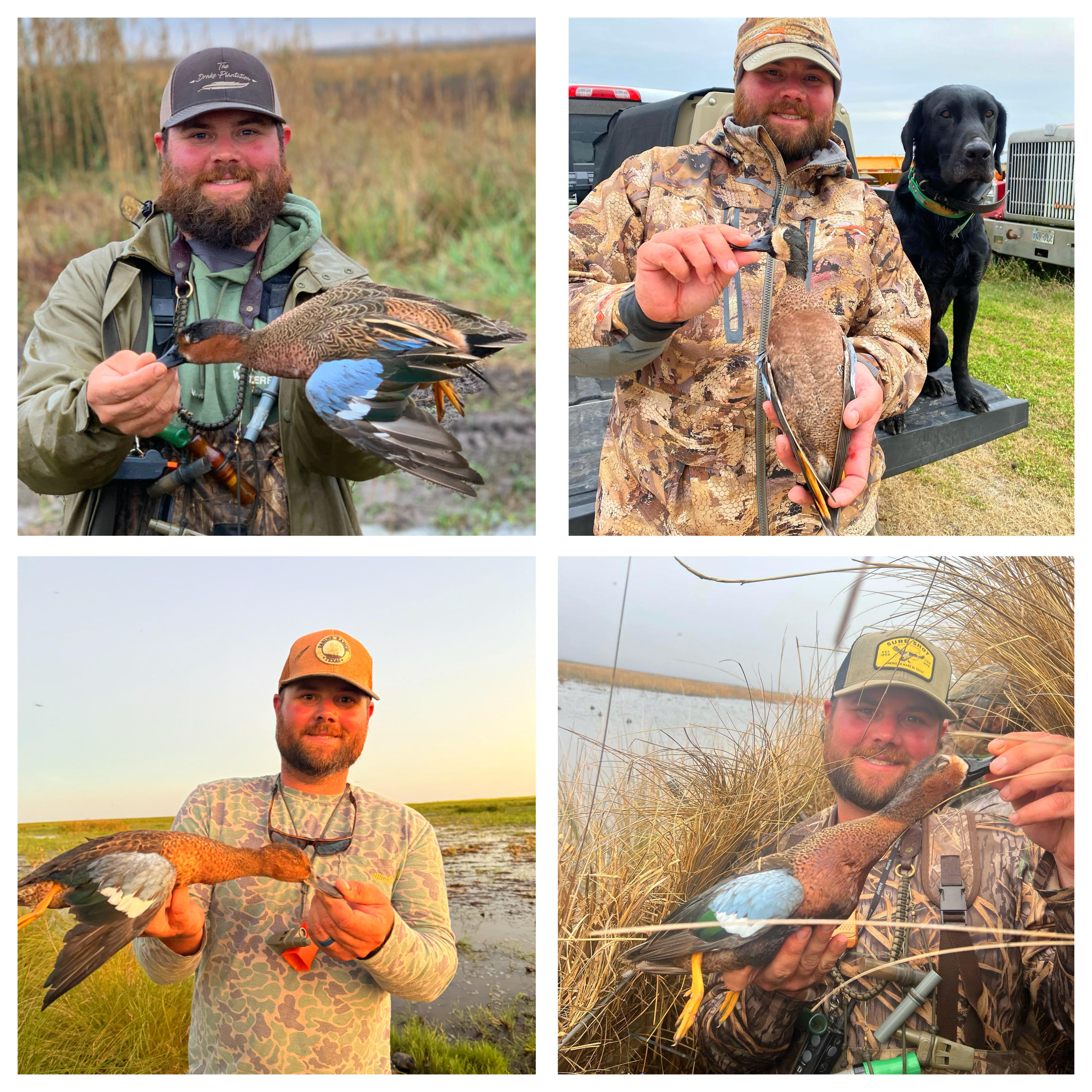
One hybrid is rare, but three blue wing/cinnamon teal hybrids within a span of five years and all within a ten-mile radius is something more than rare.
Devin Cryer is a duck hunting guide, boat captain, ranch manager, and all around avid waterfowler from Southeast Texas. Cryer’s knack for adding an anomaly to the duck strap could be luck, or it could be the result of passion, knowledge and anecdotal experience.
“I have been part of 30-plus bands with 11 being mine personally. In all my hunting I have taken five hybrids, with three of those being blue wing teal/cinnamon teal. The teal have all come from within 10 miles of one another,” said Cryer
From professional to recreational Cryer’s whole world revolves around habitat, conservation and his love for duck hunting.
“All of those birds came from almost the exact same type of habitat and, as awesome as they are, my favorite duck is the next duck. I stole that saying from Ramsey Russel.” said Cryer with a chuckle.
As fascinating and rare as hybrids are, there is little information about the actual number of hybrid waterfowl compared to the general population. However, some outfitters claim to see and/or harvest about the same number of banded birds per year as hybridized, suggesting comparable frequency within the population. Leucism, on the other hand, is a different story.
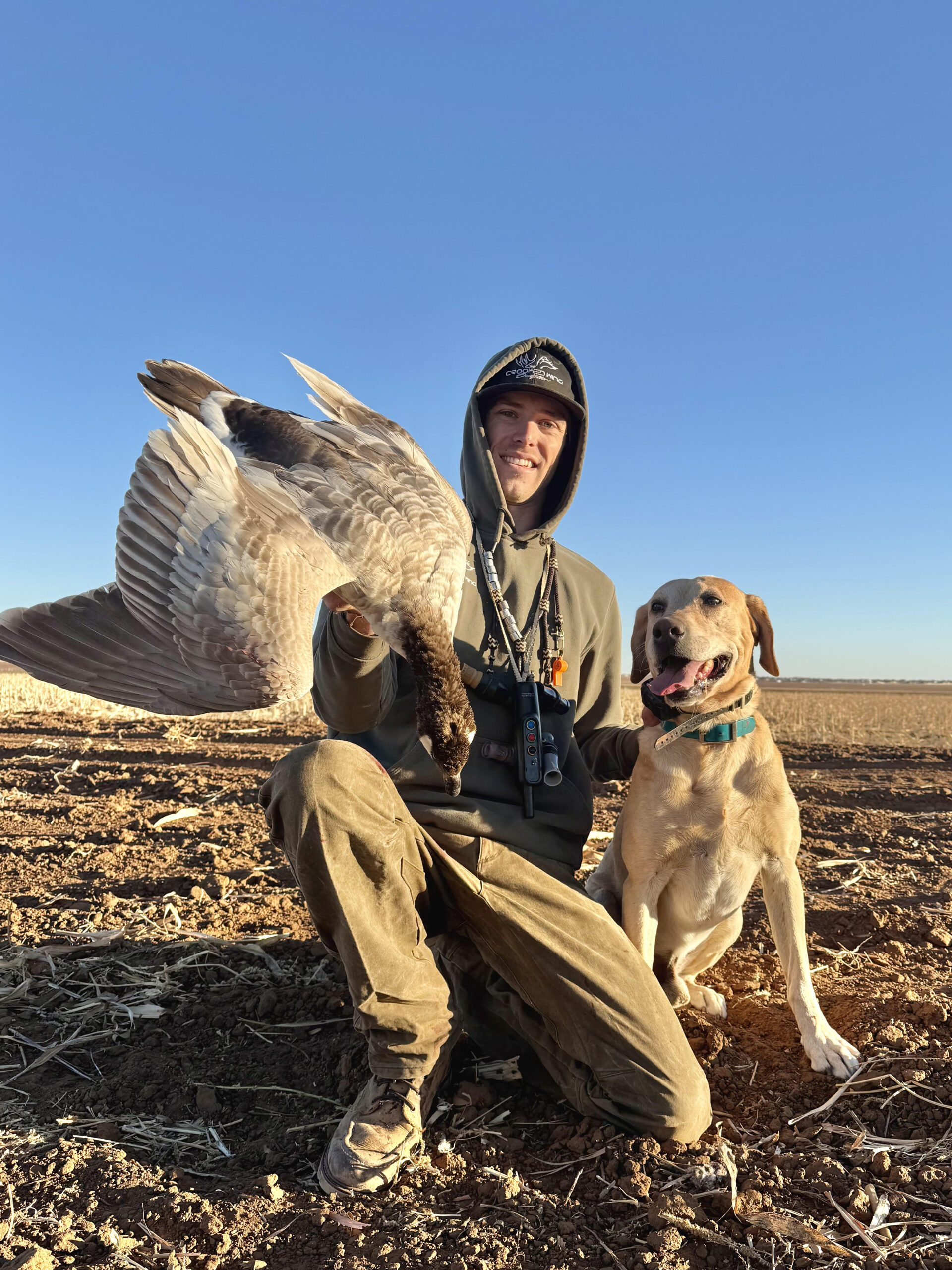
In mid-December of 2025 Will Riddle of Crooked Wing Outfitters out of Lubbock, harvested a leucistic lesser Canada goose — 1 in 30,000 odds, according to biologists.
“It was a bright sunny day, and we had the sun at our backs that really lit up the spin. When the sun hit him, he looked like a ghost among his buddies,” Riddle said. “That’s the first I have ever seen in the field or on the wing. Special bird.”
Leucism is a genetic anomaly resulting in a lighter colored individual than what is typical within the species, similar to albinism. Crooked Wing specializes in goose hunting around Lubbock, and it is no stretch for each of the seven guides to encounter thousands of birds in a day. With the one and only Riddle has seen, to say a leucistic goose is a waterfowl anomaly may not encompass the rarity.
Whether a mallard/wigeon hybrid, blue wing teal/cinnamon teal hybrid, or leucistic lesser Canada goose they hold a special place in a waterfowler’s heart.
