

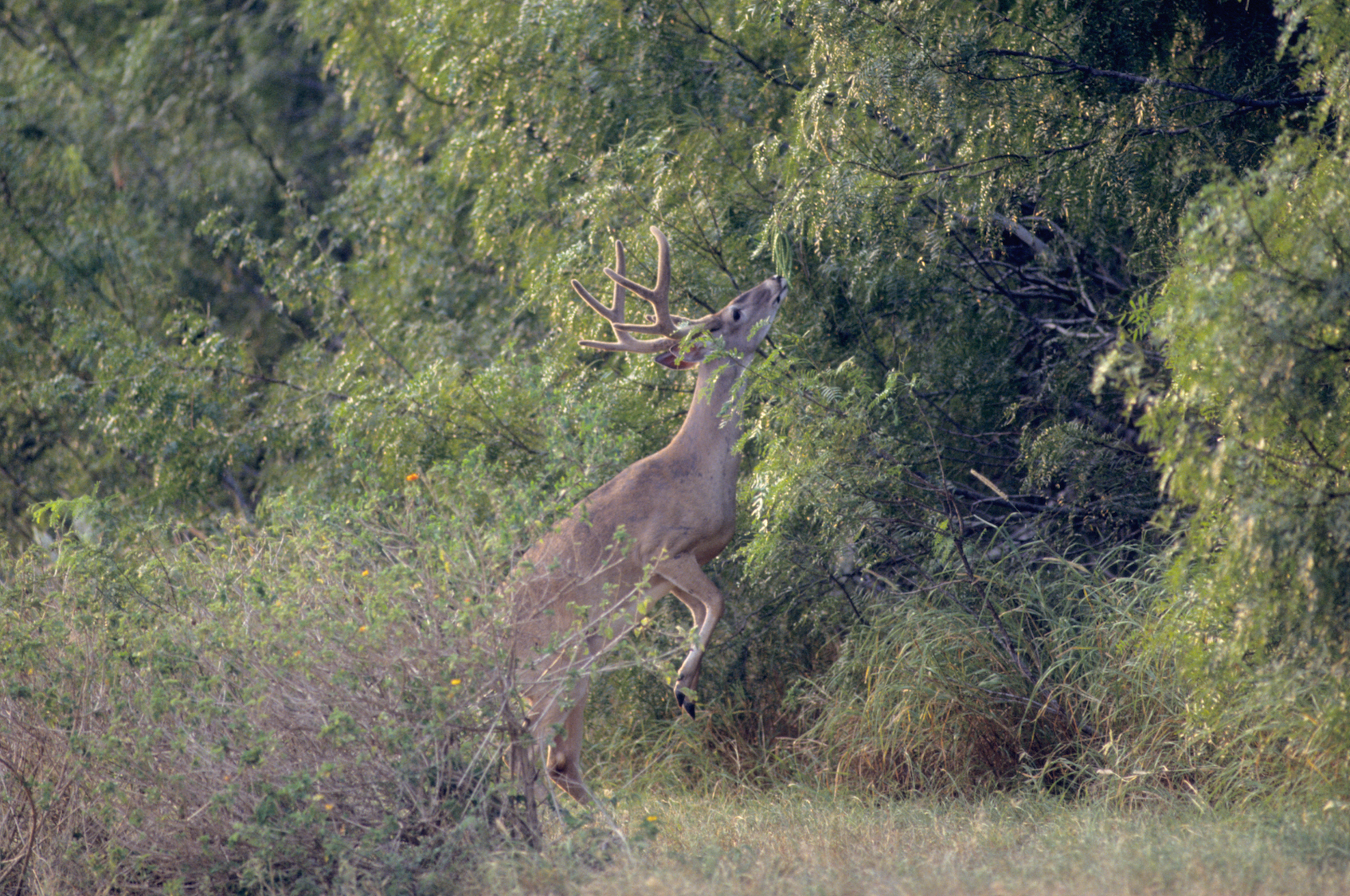
With much of the Texas landscape receiving drought-stopping rainfall this spring and early summer, there are still plenty of pockets where every passing thunderstorm seems to drift around instead of through. While those dry areas continue waiting for relief, Mother Nature is offering wildlife a valuable consolation prize.
Mesquite trees across drought-stricken portions of Texas are loaded with bean pods this summer, providing white-tailed deer with one of the most important seasonal food sources available. The naturally sweet pods arrive just as many nutritious forbs begin drying up, helping deer bridge the nutritional gap until cooler weather returns.
According to Dana Wright in Mesquite: A Drought Survival Strategy, mesquite trees seem to experience their own boom-and-bust cycle when it comes to bean production, with drought often producing the biggest crops.
“Many plants exhibit a stress-induced reproductive response, and drought is one of the triggers,” Wright wrote. “When growing conditions become harsh, mesquite trees often slow their normal growth and shift their energy into producing large numbers of bean pods. It’s the tree’s way of ensuring the next generation survives.”
That strategy benefits much more than the trees.
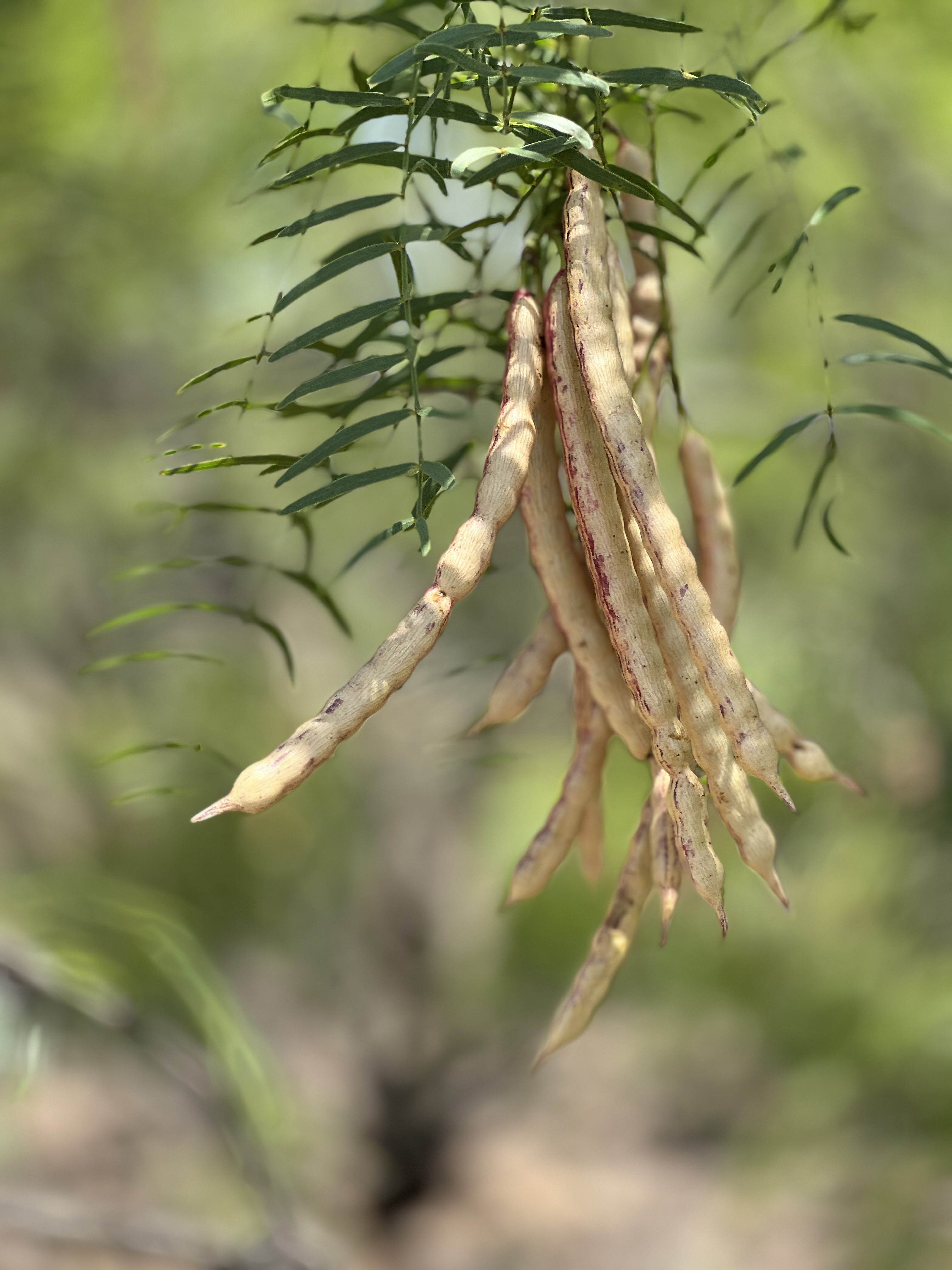
Wildlife biologists with Texas A&M AgriLife Extension and the Texas A&M Natural Resources Institute identify mesquite beans as an important natural food source for white-tailed deer during late spring and summer. The pods are rich in carbohydrates, contain moderate levels of protein and are highly digestible for ruminants, making them an excellent energy source when quality green forage becomes scarce.
Research shows mesquite beans typically contain 8 to 18 percent crude protein and about 50 percent carbohydrates, primarily natural sugars. While they are not a complete diet, they help deer maintain body condition during stressful summer months and drought. Deer still depend on a variety of native browse, forbs and mast-producing plants throughout the year to meet all of their nutritional needs.
The pods also feed a long list of Texas wildlife. Deer, cattle, coyotes, javelinas, feral hogs, rabbits and rodents readily consume the sweet beans. In the process, they help spread mesquite by passing the seeds through their digestive systems.
Mesquite relies on that process to reproduce. Wright notes the pods, which are typically 8 to 12 inches long and contain 10 to 30 seeds, do not split open naturally. Instead, animals disperse the seeds after eating the pods. Although many seeds are destroyed by insects, fungi or wildlife, some remain viable in the soil for up to 10 years.
Quail benefit from mesquite as well, although indirectly. They cannot eat the tough pods themselves, but they readily consume the seeds after they have passed through another animal’s digestive tract.
While mesquite has long been viewed as an unwanted brush species, wildlife managers often recommend leaving scattered trees while controlling dense stands. According to the Texas A&M Natural Resources Institute, mesquite provides valuable shade, thermal cover and escape cover for deer while creating habitat for numerous wildlife species. Individual trees can also support desirable browse beneath their canopy.
Mesquite has been useful to people for centuries as well. Indigenous peoples ground the sweet pods into flour, and today the beans are used to make flour, coffee substitutes, syrup, jelly and other specialty foods.
For Texas hunters, however, the biggest value is what happens beneath the trees. As bean pods continue falling throughout the summer, deer are taking advantage of one of nature’s most dependable seasonal food sources. In the driest parts of the state, where green groceries remain in short supply, that annual mesquite bean crop can make all the difference.
