

By Joseph Richards
Before settlement, the Southern Great Plains was a prairie-wildlife ecosystem dominated by short grasses and bison herds. Across this dry landscape, playas, also known as playa lakes, mud holes or buffalo wallows, were the main source of water for wildlife.
While the developed landscape looks different today, more than 200 species of birds and other wildlife still depend on these temporary wetlands as their main source of food, water, and cover.
Playas also provide water for people by recharging the Ogallala Aquifer — a 174,000 square mile groundwater formation that supplies the majority of people’s water needs in the Great Plains.
Playas are a primary source of groundwater recharge, contributing up to 95 percent of water flowing to the aquifer, with recharge rates in playas 10 to 1,000 times higher than under other areas.
“We need water to survive out here. Without water, this place is uninhabitable,” said Heather Johnson, Migratory Game Bird Specialist for Texas Parks and Wildlife Department. “Playas hold the majority of the biodiversity in the region and can support our local communities for their daily needs, rangelands, and livestock operations.”
As biodiversity hotspots, playas can support multiple recreational activities that rely on wildlife, including hunting, wildlife viewing, birdwatching and photography.
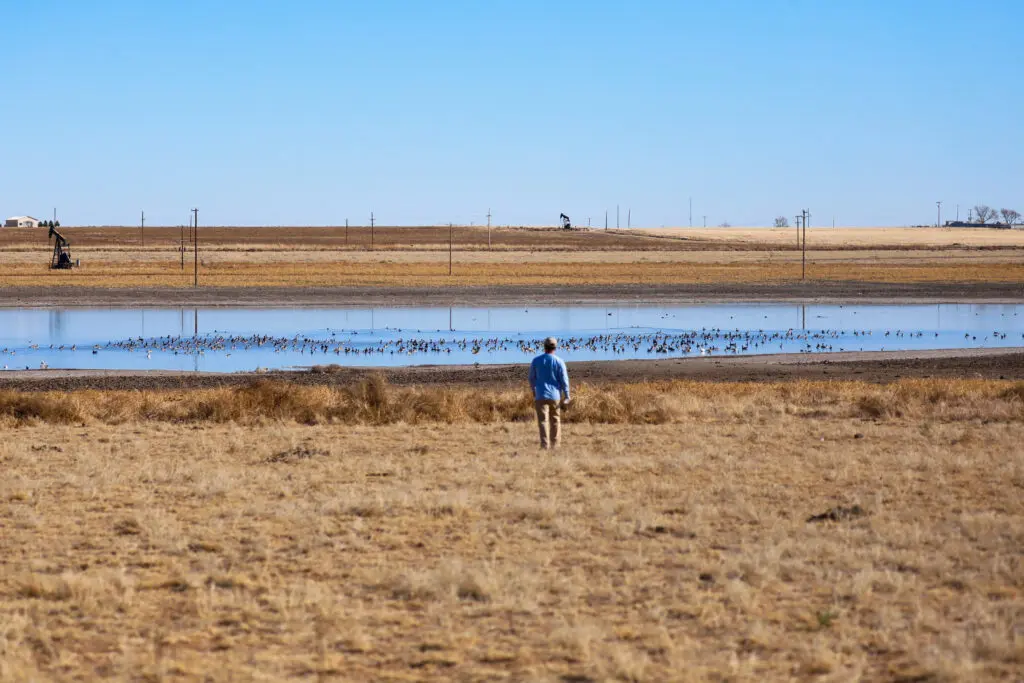
Migrating waterfowl, cranes, and shorebirds in the Central Flyway depend on these round, shallow basins as feeding and resting areas.
“Sandhill cranes will roost in playas if there’s water in them and no tree structures around — especially when near wheat fields. [Cranes] love that very shallow water,” Johnson said.
With intense development and agricultural activity around them, playa basins attract resident grassland birds such as quail and pheasants. During wet years, Johnson typically targets playas when hunting pheasants.
“Playa edges are prime pheasant habitat. When I’ve hunted in other states that have a lot of playas, that’s where I would go first because that’s most likely where you’re going to find pheasants hanging out,” Johnson said.
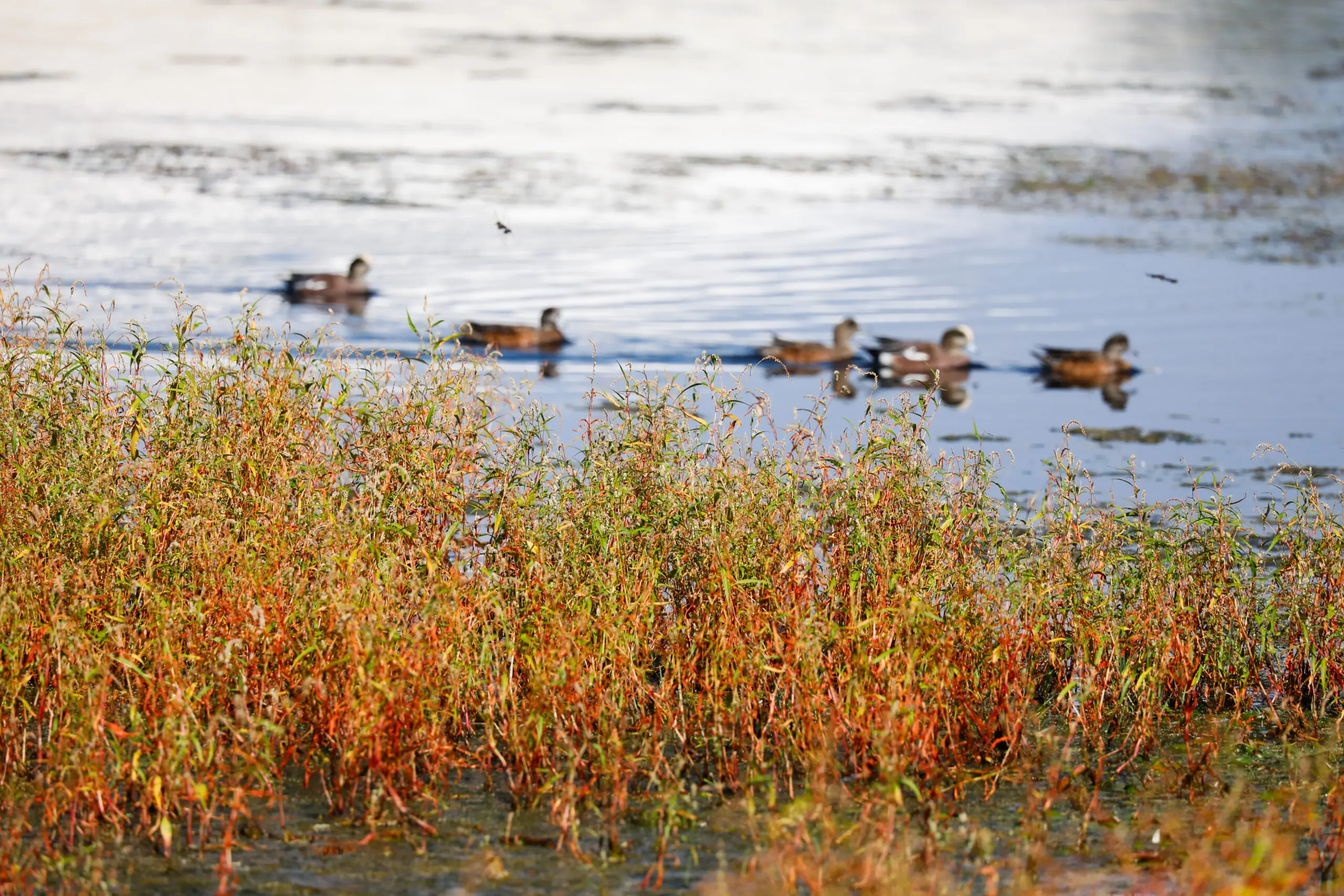
Playas collect and hold water from rainfall and runoff, and when they are functioning properly, water spreads across the basin — giving dabbling ducks access to food like pink smartweed and other annual seeds that grow in the playa.
Playas are recharge wetlands, meaning water flows through them to the underlying aquifer.
Even though playas are oftentimes dry, the wet-dry cycle promotes quality annual plant production, which attracts waterfowl and enhances groundwater recharge.
“Playas need to dry out to provide quality annual plant production for waterfowl. They also need to dry out because of the huge cracks in the basin. Early on in the rainy event, water is guzzling down into those cracks and heading towards our aquifer,” Johnson said.
To provide these many benefits, a playa has to be functioning as a healthy system. This means it has an intact clay basin – without excavated pits or ditches – that is not buried by sediment from nearby fields and is surrounded by a vegetative buffer.
“Playas are basically, one, if not the only, vectors to recharge the Ogallala Aquifer on top of the Caprock,” Johnson said. “When they’re not functioning, they don’t recharge. So, it’s important to have them in a functional state to be able to recharge the aquifer.”
Of the more than 23,000 playas scattered across the Texas High Plains, more than 80 percent have been modified by land conversion and do not fit this description.
“Many of these naturally occurring wetlands are not functioning healthily because of the modifications made to them in the past,” said Tavin Dotson, Texas Playa biologist for Ducks Unlimited. “But restoring them to their functioning state is fairly straightforward. Several programs can support landowners who are interested in restoring playas on their land, providing the funding and the expertise to help them restore their playas while meeting their operational goals.”
Playa restoration reverses past modifications by removing accumulated sediment, filling in drainage features like pits and ditches, redirecting water back into the playa, and planting native vegetative buffers around the playa. These vegetative buffers protect the playa by preventing sediment from reaching the basin and filtering contaminants from the water before it reaches the aquifer.
“When playas are functioning the way they should, they quietly do a lot of work for our water supply,” Dotson said. “Restoring them gives the region a practical, locally driven way to benefit wildlife and support future water supplies.”
As pressure on the Ogallala Aquifer grows, playa restoration can support communities searching for long-term solutions. While recharge occurs slowly — sometimes decades to centuries depending on the depth of the aquifer — restoring playas still represents one of the most effective and economical ways to return water to the aquifer.
