

By Mike Bodenchuk
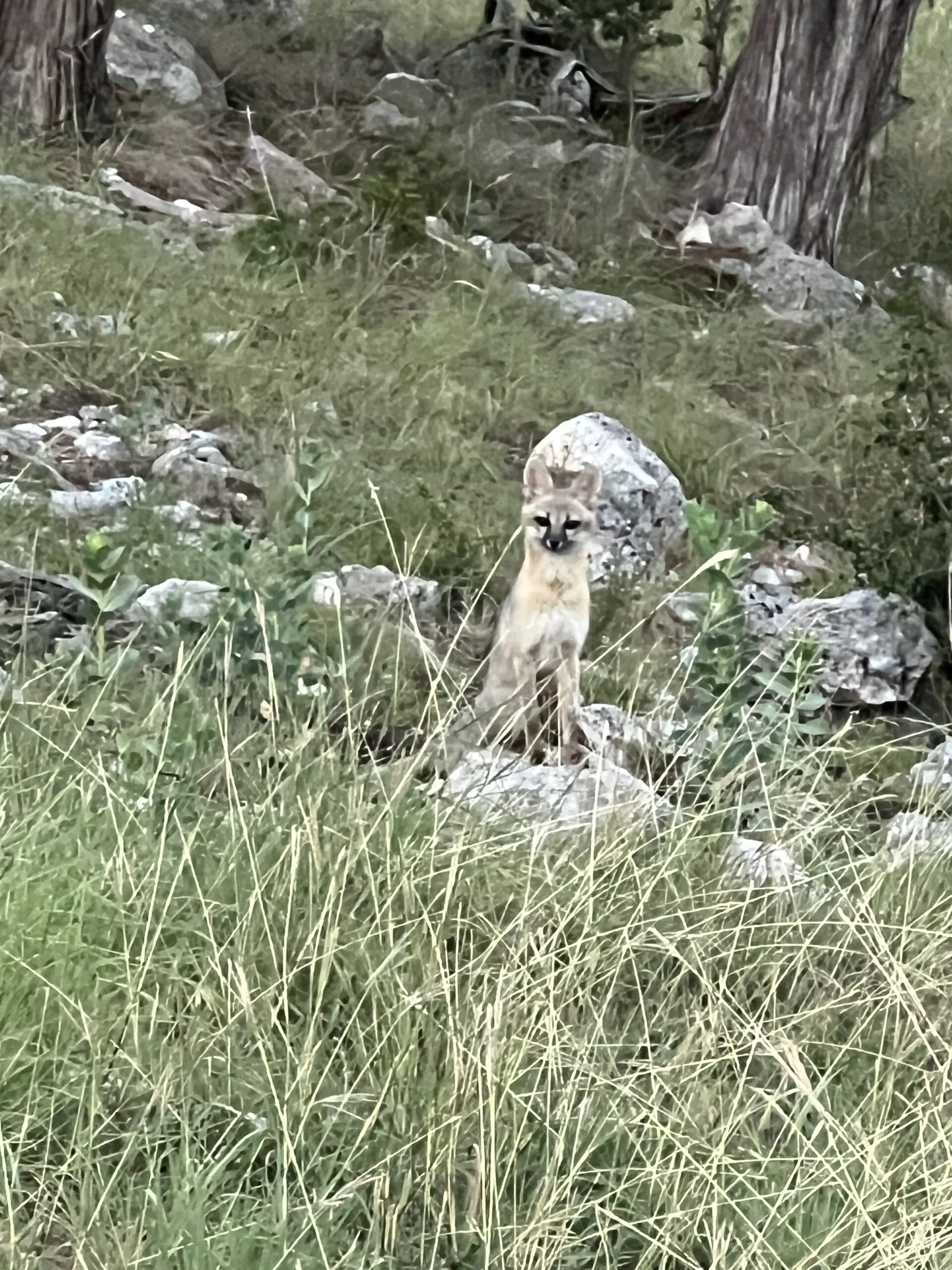
Hunters in the Texas Hill Country are being warned about rabid gray fox in what is an interesting twist of science. Rabies in the Hill Country is hardly new. The book Old Yeller was written about boyhood experiences in Mason County. But this new episode is an interesting development in rabies management.
Rabies is a viral disease that has numerous variants, typically named for the host species. In Texas, there are a number of bat variants and the South-Central skunk variant. Traditionally, there was also a Texas gray fox variant and a canine-coyote variant. The latter two were eliminated in Texas through oral rabies vaccination campaigns. What’s important is that these variants typically circulate within the host species and only occasionally spill over into other animals. When that occurs, the other animals become rabid, but scientists don’t typically see the variant start circulating in spill-over species. Rabies is always fatal in wild animals.
In this most recent case, the skunk variant has spilled over into gray foxes, and it is being perpetuated in foxes, passing from fox to fox. While the complete impact of this host-shift is yet unknown, scientists worry the virus may be mutating and the new variant may be more difficult to manage, even to the point where vaccines are no longer effective. Such spill-over events have occurred twice in Arizona, but have not been seen in Texas before.
The current outbreak appears to be centered in the eastern Hill Country, from Burnet County on the North, Travis County on the East, Bexar County on the South and Mason County on the West. Gray foxes, however, have a remarkable dispersal range and as the current crop of pups matures, the affected area may increase.
Gray foxes are abundant in the Hill Country and wild-acting foxes pose no real risk. Rabid foxes are aggressive, growling and attacking blindly. In advanced cases, animals are neurologically affected- they lose their balance and have difficulty walking. Other than the aggressive behavior, the symptoms of rabies are similar to distemper, which also circulates in foxes.
According to the San Antonio Express News, a rabid fox attacked a woman in San Marcos in March. More than a dozen rabies cases have been reported in that area in the past 12 months.
If a hunter or rural landowner encounters a suspect animal, they should dispatch it safely. The virus remains infective in bodily fluids (blood and saliva are the most common sources) until the carcass cools or the blood dries. Wear protective rubber or latex gloves when handling any gray fox. Urban homeowners in the affected area should call their local police or county health department. Any exposure to people or pets should be reported to your physician, veterinarian or the county health department. Post-exposure vaccines are necessary to prevent human or pet rabies.
Hunters contribute to rabies monitoring by submitting samples when appropriate. Various predator calling contests have collaborated with health officials by allowing the collection of samples. If a rabid animal is found, localized population reduction can help prevent the spread or perpetuation of the disease.
