

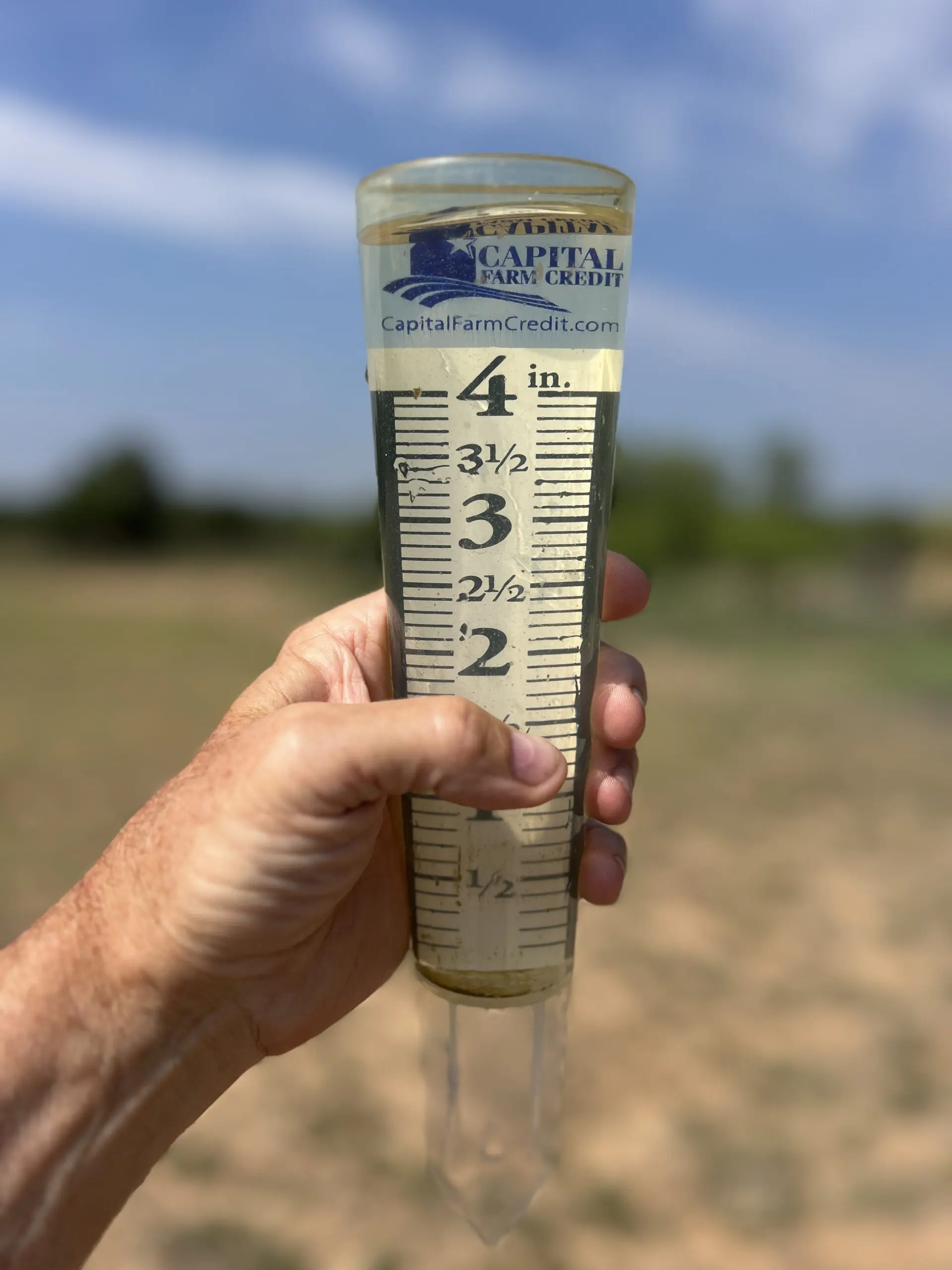
Texas hunters have been watching with approval as good rainfall has swept across the state the past few weeks.
While many folks are gearing up for the rapidly approaching fall hunting seasons, white-tailed deer fawns are hitting the ground, bucks are developing their antlers, turkeys are raising their poults, and quail are in the peak of their nesting season.
Much of how these wildlife activities play out is dependent on rainfall and range conditions. Luckily, many portions of the Lone Star State have received timely rains in the past couple of months, and things are looking good as we head into the hottest portion of the year, ahead of the highly anticipated fall season.
According to the TPWD White-tailed Deer Program Leader, Blaise Korzekwa, nearly all of Texas was experiencing some form of drought conditions when springtime arrived.
“Late spring and early summer rains drastically improved habitat conditions across the state,” Korzekwa said.
While drought conditions have improved statewide for the most part, Korzekwa said areas in the Cross Timbers region, Edwards Plateau, Eastern Rolling Plains, and pockets of the Post Oak Savannah and Blackland Prairie regions have fared better than other regions of the state.
“These areas should expect to experience an average to above average hunting season this coming fall,” Korzekwa said. “Pockets of South Texas and the Pineywoods are still undergoing extreme drought conditions. As a result, hunters in these areas may experience a less than average season.”
Korzekwa said any additional summer rainfall can certainly benefit antler development across the state, but that it would not have as much of an impact as it would, had it occurred earlier during the spring.
“Overall, the 2026-2027 season is expected to be good in terms of harvest numbers and quality bucks,” Korzekwa said. “Some ecoregions may have missed out on adequate spring and early summer rainfall; however, hunters should still expect to enjoy a great season filled with plenty of opportunities.”
According to the National Weather Service, in early June the Lubbock Airport had recorded a year-to-date rainfall total of 5.64 inches. Del Rio has recorded a total of 9.29 inches of cumulative rainfall so far in 2026, according to the RainDrop app. San Antonio Express-News Meteorologist, Anthony Franze, reported San Antonio had received 20.87 inches of total rainfall as of June 16. RainDrop app data indicated Freer had recorded 15.30 inches of cumulative rainfall as of mid-June, and that Fredericksburg had recorded 17.52 inches of total rainfall as of mid-June. As of early June, KXAN reported 16.42 inches of cumulative rainfall recorded at Austin-Bergstrom International Airport. Data from the RainDrop app reported cumulative rainfall for Tyler as of mid-June at 19.12 inches.
TPWD Wildlife Biologist for Williamson and Bell counties, Cullom Simpson, said late spring and early summer rains have been abundant.
“I’ve been seeing plenty of does with twin fawns, and bucks seem to have a decent start on antler growth so far,” Simpson said. “This is a direct result of excellent range conditions to the timely rains central Texas received over the last several months.”
Simpson said one thing to note is the area has experienced flooding in certain areas.
“When water sits in areas for an extended period of time, it often results in a die off of vegetation over stretches of ground that were flooded,” Simpson said. “It will be interesting to see how this may affect or shift deer movements and behavior.”
Simpson said there is an abundance of tall vegetation and heavy cover across the landscape right now. As far as turkeys and quail are concerned, he said the structure of this overgrown vegetation will determine how these ground nesting birds are able to use and adapt to this thick cover.
“Areas with native bunch grasses are seeing lots of activity from turkeys with poults right now, as well as quail, because this type of vegetation still offers the birds some open areas to see and move around,” Simpson said. “Other types of crops and vegetation that don’t naturally provide some open areas for these birds, are making it tough for the birds to walk through right now. Overall, though, the timeliness of the rain we received, and the amount of cover on the landscape, should bode well for our turkey and quail populations.”
